Assessing a Football Card Pull: What to Look for After Opening a Pack
Opening a fresh pack of football memorabilia cards is always exciting. The real challenge, though, comes right after the foil tears. You have a handful of cards in your hand, and you need to decide quickly which ones matter and which ones are just set filler. A methodical approach to assessing your pull saves time, helps you spot value you might otherwise overlook, and makes the whole experience more satisfying.
Every collector develops their own routine, but the basic principles stay the same. You want to sort the cards by type, check condition, evaluate the player, consider the card's rarity, and think about long-term appeal. Here is a step-by-step way to do that.
Sort by Category First
The moment you have the cards out, separate them into broad groups. Base cards from the main set go in one pile. Inserts, parallels, and special cards go in another. Autographs, relics, and match-worn or player-worn items get their own pile. This first pass does not need to be perfect. You just want to get a sense of what the pack contained.
Most packs will yield mostly base cards, so do not be disappointed if that is what you see. The key is to spot the exceptions. A single insert or hit can make the whole pack worthwhile. By sorting quickly, you prevent yourself from scanning the same cards repeatedly and missing something unusual.
Check the Condition of Every Card
Condition matters enormously in football memorabilia cards. Even a rare card loses much of its value if the corners are dinged, the surface is scratched, or the edges show whitening. As you go through each card, hold it by the edges and examine the front and back under good light.
Look for the obvious things first: creases, bends, print lines, or discolouration. Then check the corners. A card that came out of the pack with soft corners is still a disappointment. If you find a card that looks clean, set it aside for possible grading later. Grading can add a premium, but only if the card is genuinely near-mint or better. If the card has obvious flaws, it is probably better to keep it raw or trade it at a discount.
One thing to watch for on modern cards is factory damage. Sometimes a card is slightly off-centre from the cutting process. A small amount of off-centre printing is common, but if the image is noticeably lopsided, the card's grade will suffer. The same goes for surface scratches that come from the manufacturing process itself. These are not your fault, but they still affect the card's condition.
Evaluate the Player
The player on the card is a huge part of its value. A star player from a top club, especially a current or recent legend, will almost always be more desirable than a journeyman or a player from a less popular era. That does not mean a card of a lesser-known player is worthless. Some collectors focus on specific teams, eras, or even specific roles like goalkeepers or defenders. But if you are trying to assess the card's trade or resale value, the player's name carries weight.
Think about the player's career stage. A rookie or early-career card of a player who later became a star can be a major find. Conversely, a card of a player who never quite lived up to early promise may not hold its premium. Also consider whether the player is still active. A card of a retired legend might have a stable, established value, while a player in the middle of a hot season could see his card prices spike temporarily.
Consider the Card Type and Rarity
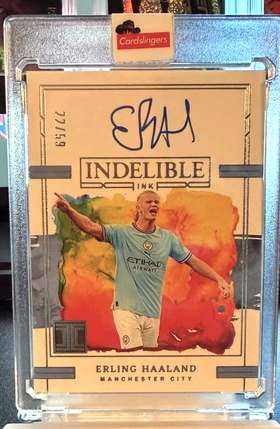
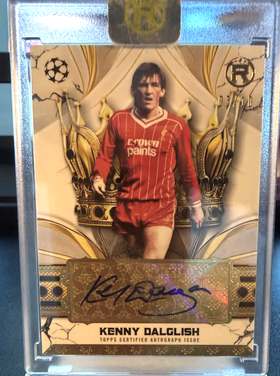
Football memorabilia cards come in many varieties. The most common are base cards from the regular set. Then you have inserts, which are special cards with different designs, often featuring a particular theme like "match-worn relics" or "autograph cards." Parallels are versions of base cards or inserts with different foil treatments, colours, or textures. Relic cards contain a small piece of match-worn or player-worn material, such as a fragment of a shirt or a piece of a boot. Autograph cards carry a player's signature, either hand-signed or printed as part of the card.
Rarity is usually indicated by the card's serial number or by the stated print run. A card numbered to 50 is much rarer than one numbered to 500. Some cards have no serial number, which can mean they are either very common or very rare depending on the set. For cards without a serial number, you need to rely on checklist information from the manufacturer or community knowledge to understand how many exist.
Autograph cards and relic cards tend to be the most sought after, but their value depends heavily on the player and the authenticity of the signature or relic. A match-worn relic from a star player's shirt, with a certificate of authenticity or a clear provenance, can be the crown jewel of a collection. On the other hand, a generic relic from a lesser-known player might be worth only a modest amount.
Look for Authentication and Provenance
If your pack contains an autograph card or a relic card, check for any marks of authenticity. Many modern cards include a hologram, a serial number, or a statement from the manufacturer guaranteeing the item's origin. For older cards, the provenance might be less clear. In those cases, the card's condition and the reputation of the seller matter a lot.
When you are assessing a pull, the presence of a clear chain of provenance can turn a good card into a great one. A card that comes with a documented history, such as being from a specific match or training session, often commands a premium. Without that, you rely on the card's own attributes and the trust you have in the source. This is where a site like craigcamcards.com, which specialises in football memorabilia cards and offers live repacks on Whatnot, can help you understand what you have. Their community often discusses authentication and provenance on their streams.

If you are unsure about a card's authenticity, compare it to known examples online. Look at the signature style, the placement, and the quality of the relic piece. Many fakes exist, especially for popular players, so being cautious is wise.
Think About the Card's Long-Term Appeal
Some cards are hot for a week and then fade. Others hold their value or even appreciate over time. When you assess a pull, ask yourself whether the card will still be desirable in a year or five years. Cards of players who are likely to have long, successful careers tend to hold value. Cards that commemorate a specific moment, like a cup final or a record-breaking season, can also retain interest.
Cards that are part of a popular set or series also tend to have more stable values. If the set has a strong following, collectors will keep seeking it out. On the other hand, cards from obscure or short-lived sets may have a smaller audience and thus less liquidity.
Condition also plays a role in long-term appeal. A card that is already in pristine condition is more likely to stay that way if stored properly. A card with minor flaws may degrade further over time, especially if it is not stored in a sleeve and toploader.
Decide What to Do With Each Card
After you have sorted, checked, and evaluated, you need to make a decision for each card. The options are simple: keep it for your personal collection, trade it, sell it, or use it to fill a set. Base cards that you already have duplicates of can go into a trade pile. Inserts and hits that do not fit your collection can be sold or traded for something you want more.
For high-value cards, consider whether you want to send them for grading. Grading can increase the card's value and make it easier to sell, but it costs money and takes time. If the card is already in excellent condition and the player is a star, grading is often worth it. If the card has visible flaws or the player is not highly sought after, the cost of grading might not be justified.
Remember that the market for football memorabilia cards can be volatile. Prices change with player performance, new set releases, and collector trends. A card that seems mediocre today might become desirable next season. If you are not sure, it is often better to hold onto a card for a while rather than sell it quickly for a low price.
Keep Records
Finally, get into the habit of logging your pulls. Write down the card details, the date you pulled it, its condition, and what you decided to do with it. Over time, this record will help you spot patterns: which packs tend to yield good hits, which players are consistently valuable, and how card values change. It also helps if you ever need to prove ownership or provenance for insurance or resale purposes.
A simple spreadsheet or a notebook works fine. Some collectors use apps or online databases. The important thing is to have a system so you do not rely on memory alone. As you build your collection, this record becomes a useful reference, especially when you trade or sell.
Assessing a football card pull is as much about patience and attention as it is about luck. By following a clear process, you turn a random rip into a structured evaluation. You will spot the cards that matter, avoid overvaluing the ones that do not, and build a collection that reflects your interests. If you ever want to see how other collectors assess their pulls, you can watch live repacks on sites like craigcamcards.com, where the community often talks through the value of each card as it appears. That kind of shared knowledge can sharpen your own judgment over time.